



Adelaide Who's Who
YOUR COMMUNITY. YOUR CONNECTIONS.
Meet the people behind the place.
Discover the people, businesses and groups who call Adelaide home, and meet members across Australia.
Each Portrait connects you with the public introduction and links that member has chosen to share.
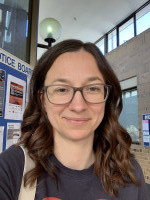
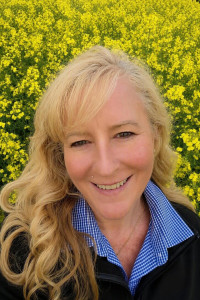
Rebekah Ryan
Hi, I'm Rebekah, an Adelaide photographer capturing families, milestones and performances through real moments, genuine connections and the stories th…
View Public Profile
Rose Irranca
Founder of Holistic Kids, passionate about helping families discover the many holistic options available to support their children’s wellbeing. With a…
View Public Profile
Andre Garcia
I give it my all and do my work in the most professional way I know how. I am hard working an honest with my clients giving them the most cost effecti…
View Public Profile
PART OF THE WIDER NETWORK
Meet members across Australia
Discover members from other towns, cities and regions.
Distinguished and Famous people from Adelaide
Adelaide's notable people include those born in the city and those who made it the base for their work. These lives connect its universities, courts, art schools and music scene with achievements far beyond South Australia.
🏅 Dame Roma Mitchell
Born in North Adelaide in 1913, Roma Mitchell studied law at the University of Adelaide before building her career in the city. In 1962 she became Australia's first female Queen's Counsel, followed in 1965 by appointment to the Supreme Court of South Australia. She later served as Governor of South Australia. Her student years provide an early glimpse of her determination: when the Law Students' Society excluded women, she helped establish a women's society and won its debating prize in both 1933 and 1934.
Behind the succession of firsts were concrete arguments about who could participate in public life. Mitchell pressed for equal pay and for women to sit on juries, alongside work on criminal law reform and human rights. As governor she also supported the centenary of women’s suffrage in 1994. Her influence extended from entering institutions herself to widening the opportunities available to others.
🔬 Sir Douglas Mawson
Douglas Mawson studied engineering and science at the University of Sydney before joining the University of Adelaide as a lecturer in mineralogy and petrology in 1905. He became its professor of geology and mineralogy in 1921. Alongside his research into South Australian geology, he took part in Shackleton's Antarctic expedition and led the Australasian Antarctic Expedition of 1911–14. His account, The Home of the Blizzard, appeared in 1915. Adelaide was the academic base for a career that combined field science, teaching and polar exploration.
🤝 Don Dunstan
Born in Fiji, Don Dunstan attended St Peter's College in Adelaide and studied law at the University of Adelaide. He won the parliamentary seat of Norwood in 1953 and served as South Australian premier in 1967–68 and 1970–79. His governments pursued reforms in Aboriginal land rights, equal opportunity, consumer protection and electoral law, while supporting institutions including the Adelaide Festival Centre and the South Australian Film Corporation. Politics was not his only interest: he published a cookbook in 1976 and later opened Don's Table restaurant in Norwood with Steven Cheng.
🎨 Sir Hans Heysen
Hans Heysen came to South Australia from Germany with his family in 1884 and attended schools in Adelaide. He trained at James Ashton's Norwood Art School before studying in Europe, returning to Adelaide in 1903. His landscapes, particularly his studies of gum trees and the Adelaide Hills, became central to his reputation. He first won the Wynne Prize in 1904. One early supporter was Ashton himself, who bought the young artist's watercolour The Wet Road; Adelaide patrons subsequently helped finance Heysen's European training.
🎵 Paul Kelly
Paul Kelly grew up in Adelaide before developing his career as a singer and songwriter in other Australian cities. His recordings include Gossip, while songs such as To Her Door, Dumb Things and How to Make Gravy tell stories through recognisable characters and situations. With Kev Carmody, he wrote From Little Things Big Things Grow about the Wave Hill walk-off. His range also extends to setting poetry to music, including Shakespeare's sonnets. A Christmas message about making gravy is an unlikely songwriting subject, but Kelly found a story in it.
🎵 Sia Furler
Adelaide-born singer and songwriter Sia began her recording career with the band Crisp before working with the British group Zero 7 and developing an international solo career. Her songs include Chandelier and Elastic Heart. Her work also reaches listeners through other performers: she contributed to Rihanna's Diamonds and David Guetta's Titanium. That combination of performing and songwriting explains why her music may be familiar even when another artist's name is on the recording.
🐟 George Angelakis
Seafood merchant George Angelakis moved to Adelaide in 1959 after years of fishing and co-operative work on South Australia’s west coast. With his brother Nick and brother-in-law Sam Sperou, he established Angelakis Bros at the Adelaide Central Market the following year. The business sold South Australian seafood alongside freshwater fish and imported produce, with working days beginning around three in the morning. It later developed into a major distributor with overseas markets. George’s community work and fishing experience preceded the shop counter; his son Michael later brought the family’s seafood expertise to television. The names belong to different generations of the same enterprise.
⛏️ Charles Rasp
Mining entrepreneur Charles Rasp made Adelaide his home after the success of the Broken Hill venture. His earlier work was as a boundary rider at Mount Gipps Station, with prospecting fitted into spare time. When he investigated the Broken Hill outcrop, he initially thought the deposit contained tin. A group of seven developed the claims, and the discovery of valuable silver, lead and zinc led to the formation of BHP in 1885. Wealth followed, and Rasp moved to Adelaide, married and bought a mansion. The city belongs to this later residential chapter of a career whose decisive mineral discovery had taken place across the border.
📐 Henry Ingham Ashworth
Architect and educator Henry Ingham Ashworth contributed to the University of Adelaide through consultancy on its arts and architecture buildings. His principal academic appointments were in Sydney, where he helped reform architectural education and chaired the assessors for the Opera House design competition. The Adelaide association is a specific professional commission within that wider career. His work moved between teaching, university planning and practical building advice, bringing the experience of an architectural educator into the places where students themselves would learn.
📚 Colin Badger
Colin Badger moved to Adelaide with his family in 1916 after drought and poor trade forced the closure of his father’s country shop. A laboratory and library job at the University of Adelaide opened a path into study, and he transferred his early religious zeal into adult education. He became a champion of learning through reading, discussion and the arts. In Victoria, his work included a box scheme that sent sets of books and discussion notes to rural groups, as well as travelling theatre and an arts train. Education, in his hands, could turn up well beyond a lecture room.
📰 John Langdon Bonython (1905–1992)
John Langdon Bonython, born in Adelaide in 1905, expected to join the family newspaper business after studying law in Britain. He returned to find that his grandfather had sold control of the Advertiser, so he began practising law instead. Business ventures followed, including the founding of Santos with Robert Bristowe in 1954. Exploration brought repeated disappointments before commercial gas discoveries. He later chaired Advertiser Newspapers, taking a close interest in staff, grammar and accurate headlines. He was the grandson of the earlier Sir John Langdon Bonython: similar names belonged to distinct careers in the city’s business history.
📚 Garth Boomer
Garth Boomer studied at the University of Adelaide and Adelaide Teachers College before becoming a leading figure in curriculum and teacher development. His ideas put learning in a partnership between teachers and students, allowing pupils some choice and encouraging teachers to investigate their own classroom practice. He combined administrative responsibility with an energetic writing and speaking career in English and literacy. He also contributed to the creation of the children’s television programme Lift Off. For Boomer, educational reform could involve policy papers and classroom research, but imagination had a place on the screen as well.
⚖️ John Jefferson Bray
John Jefferson Bray built his legal and literary career in Adelaide, becoming South Australia’s chief justice in 1967 and the university’s chancellor the following year. A poet and playwright as well as a barrister, he participated in Writers’ Week and spent more than four decades on the state Libraries Board. His judgments were noted for clarity and historical reasoning. He also brought a dry wit to arguments over censorship, questioning the supposed danger of material that officials and lawyers were apparently safe to read. Literary conversation, classical study and a demanding legal career coexisted in a public figure who resisted fitting neatly into one profession.
🩺 Elma Casely
Elma Casely trained in Adelaide and later led the university’s physiotherapy course from the mid-1940s until her retirement in 1964. She developed a reputation as a skilled teacher and a determined advocate for the profession. At Adelaide, her office for ten years was a desk in a passageway, yet the course gained strong international recognition and trained more than 250 physiotherapists. Deafness from her twenties did not prevent effective communication with patients, students and colleagues. Her career shows the work behind establishing a profession: teaching standards and persistence could matter more than impressive office accommodation.
🌿 David Guthrie Catcheside (1907–1994)
David Guthrie Catcheside came to Adelaide in 1952 to establish a genetics department, first at the Waite Institute and then at North Terrace. His research investigated chromosomes, gene action and genetic recombination, while natural history remained a lifelong enthusiasm. He hoped for a community of biologists working across conventional specialist divisions. The ANU school did not fully adopt that vision, but its new building brought six wings together around a refreshment area named Catcheside Court. After returning to Adelaide in retirement, he published both a genetics book and The Mosses of South Australia. Microscopic inheritance and the plants under a bushwalker’s feet belonged to the same curious mind.
🎨 Dora Chapman
Dora Chapman trained at the South Australian School of Arts and Crafts and later became a respected teacher at the School of Art. Her early portraits won prizes, including a painting of fellow artist John Dowie. Teaching and arts administration accompanied work that moved between realism, abstraction and expressionism. After retiring from teaching in 1969 she explored silkscreen printmaking while also caring for her husband, artist James Cant. Later exhibitions renewed attention to her own achievement. She used Cant as her married surname but continued exhibiting as Chapman, keeping a distinct artistic name within a shared creative life.
